[B2B] [Web app] [Mobile]
Finally
B2B fintech platform for small business banking. Over 12 months, I designed and shipped 7 products to production alongside a Head of Product and engineering team. All built on a single design system with 1-to-1 Figma-to-code parity.
Role
Lead Product Designer
Year
2024-2026
Platform
Web · Mobile
[Context]
Finally is a B2B fintech multi-platform product.
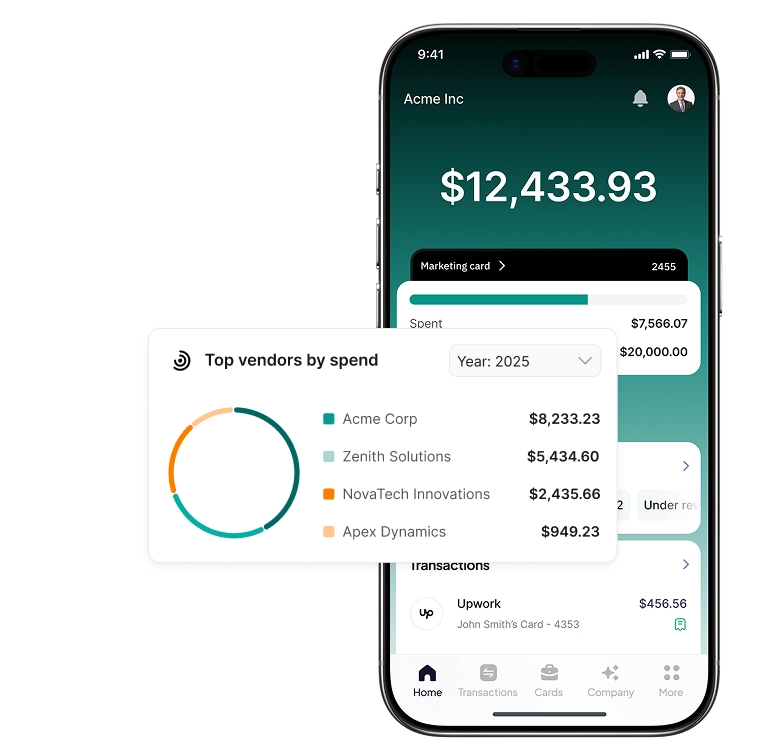
Finally is a B2B fintech platform built for small business banking. The product team needed to ship fast - multiple products in parallel - without accumulating visual debt or duplicating design effort across every new surface.
[Problem]
What we aim to solve?
When I joined Finally, the design foundation was in rough shape. The existing system had grown organically — components defined inconsistently, styles duplicated across files, no clear token structure. It couldn't support the pace the product team needed. Four problems needed solving before we could ship anything with confidence:
The original accounting screen buried users in friction. A 10-row default cap forced constant pagination through transaction-heavy data. Horizontal scroll made the table exhausting to navigate.
After observing real workflows, the redesign addressed each failure point directly. The table became fully customizable, users control which columns are visible, resize and pin what matters, and work with a default row count that matches actual usage patterns. Fixed columns eliminated horizontal drift on wide datasets. Navigation was restructured around how accountants actually move through the product, and the layout was adapted for mobile without sacrificing the density that power users depend on.
The original navigation relied on generic illustrated icons - visually inconsistent, interchangeable with any other fintech product, and carrying no brand signal.
The redesign unified all 9 products under a single brand architecture
[Design system v2]
Scalable, and AI friendly
I built a production-ready design system in Figma that mapped 1-to-1 with the component library in code. Every token - spacing, color, radius, typography - had a direct counterpart in the front-end. This meant engineers could implement designs without interpretation, and new products could be assembled from existing parts rather than rebuilt from scratch each time. The system supported both light and dark mode from day one, and scaled across all seven product surfaces without needing significant rework.
[Products shipped]
Finance suite
Over twelve months, the design system enabled rapid delivery across seven distinct product areas, each one designed to spec, handed off clean, and shipped to production. The shared foundation meant that adding new surfaces became progressively faster as the system matured.
[Outcome]
Outcome
Seven products shipped to production in twelve months, all from a single coherent design system. No visual debt. No divergence between design and code. A foundation that the team could continue building on after the engagement ended
Onboarding flow redesign. I aimed to provide rich experience and get users to value faster.