[B2B] [SaaS]
Vesta
Vesta is US based company that provides SaaS solution for property managers.
Role
Product Designer
Year
Mar, 2023 - Jan, 2024
Platform
Web
[Problem]
What we are looked
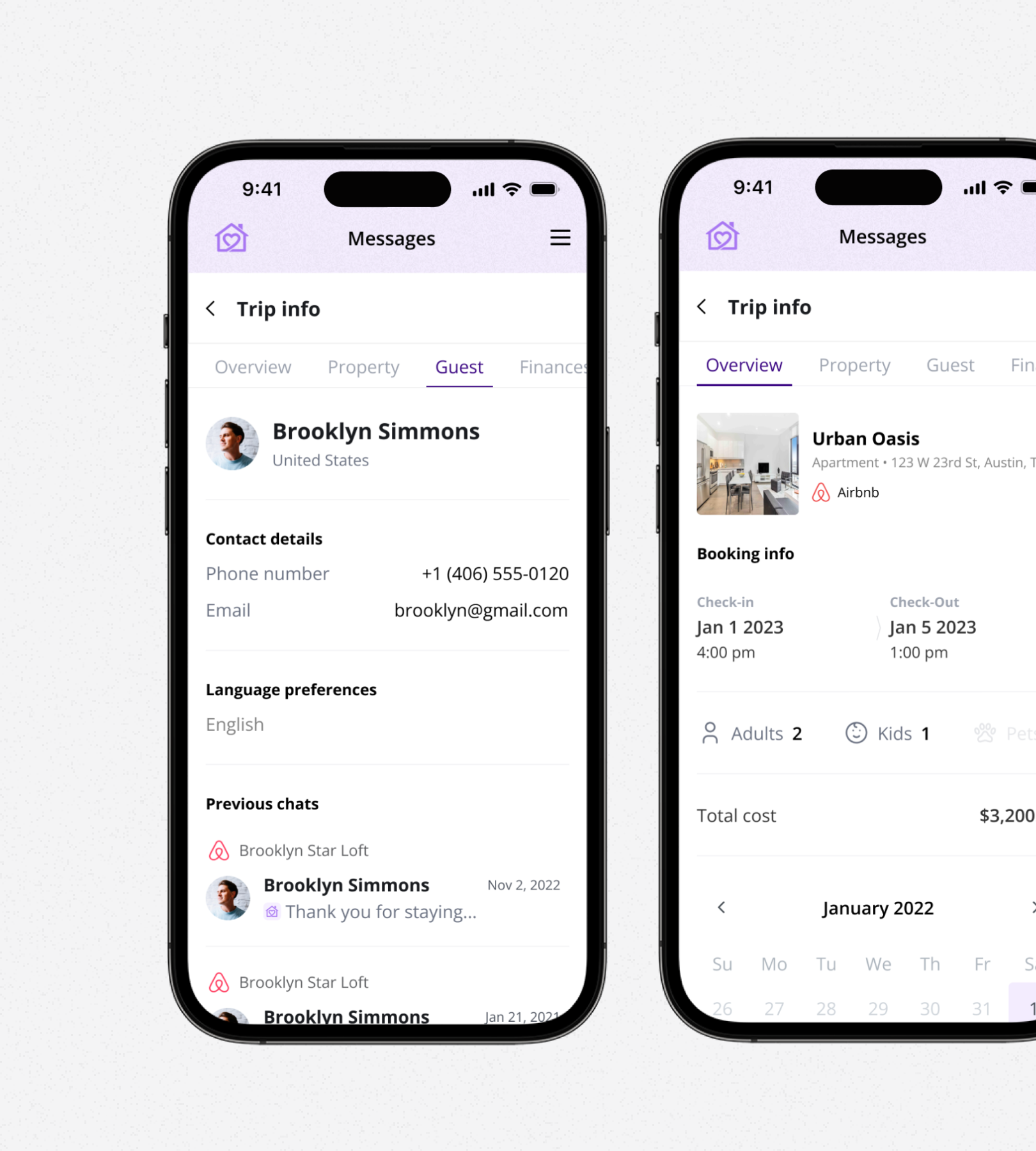
Property managers deal with a substantial workload and need the ability to control bookings, handle financial aspects, and manage new inquiries from multiple sources. Vesta is called upon to address these issues. The major problems Vesta faces include: 1. The current Vesta application is confusing and difficult to navigate. 2. UX flaws make it difficult to find primary actions, leading to a significant increase in customer support requests. 3. Managing the financial aspect was challenging, and navigation was confusing.
[Style refinement]
Finding direction
The team needed a visual language that felt professional and trustworthy, while keeping development effort manageable given the small engineering team. I proposed two directions:
This version aimed to address UX issues with minimal intervention in the existing interface to save time for front-end development
The alternative version focuses on optimizing space utilization, minimizing optional and non-value-added paddings to save room for complex screens and tables.
[Styles]
Design System & Components
To maintain consistency across a fast-moving build, I developed a shared component library covering buttons, form inputs, modals, tables, status badges, and navigation elements. This became the single source of truth for both design and front-end implementation - reducing back-and-forth and keeping visual decisions out of code reviews. For a pre-seed startup shipping a beta under time pressure, the library wasn't exhaustive - it was scoped to what was actually being built, with enough structure to extend cleanly as the product grew.
[Research & Exploration]
What we found
At the pre-seed stage, Vesta had a small but engaged early-adopter base. We didn't have large-scale analytics, so research focused on what was available: structured interviews with early testers, a review of the most frequent customer support tickets, and competitive analysis of tools like Hostaway. Key takeaways: 1. Navigation lacked hierarchy - users lost context when moving between sections. 2. Notification coverage was insufficient - property managers needed proactive alerts for events affecting reservations (cancellations, payment failures, date conflicts). 3. Financial views were data-heavy but not decision-ready - numbers were present, but context wasn't. 4. Management styles varied - some users tracked finances per-property, others portfolio-wide. The UI needed to flex for both.
[Results]
What we achieved.
The beta shipped in early 2024 with a redesigned interface and new financial management features. For a pre-seed product at this stage, success wasn't measured in revenue figures - it was measured in signal: do users stay, do they understand the product, and does the team spend less time firefighting? By those measures, the redesign delivered: Reduced support load. Recurring "how do I find X" tickets dropped noticeably after launch. Navigation restructuring and surfaced primary actions meant users could complete core tasks without assistance - a meaningful shift for a team without a dedicated support function. Faster beta onboarding. New users coming into the beta required less hand-holding from the team. The cleaner information architecture and consistent component patterns reduced the orientation time that had been a friction point during early MVP demos. Stronger demo-to-trial conversion. The redesigned UI gave the team a product they could confidently show to prospective customers. Early feedback from demos shifted - conversations moved from "this is confusing" to feature questions, which is a real signal at this stage. Foundation for the next round. A coherent component library and documented design system meant the engineering team could move faster post-beta without design debt accumulating. For a startup preparing to raise a seed round, that operational maturity matters to investors evaluating team execution.